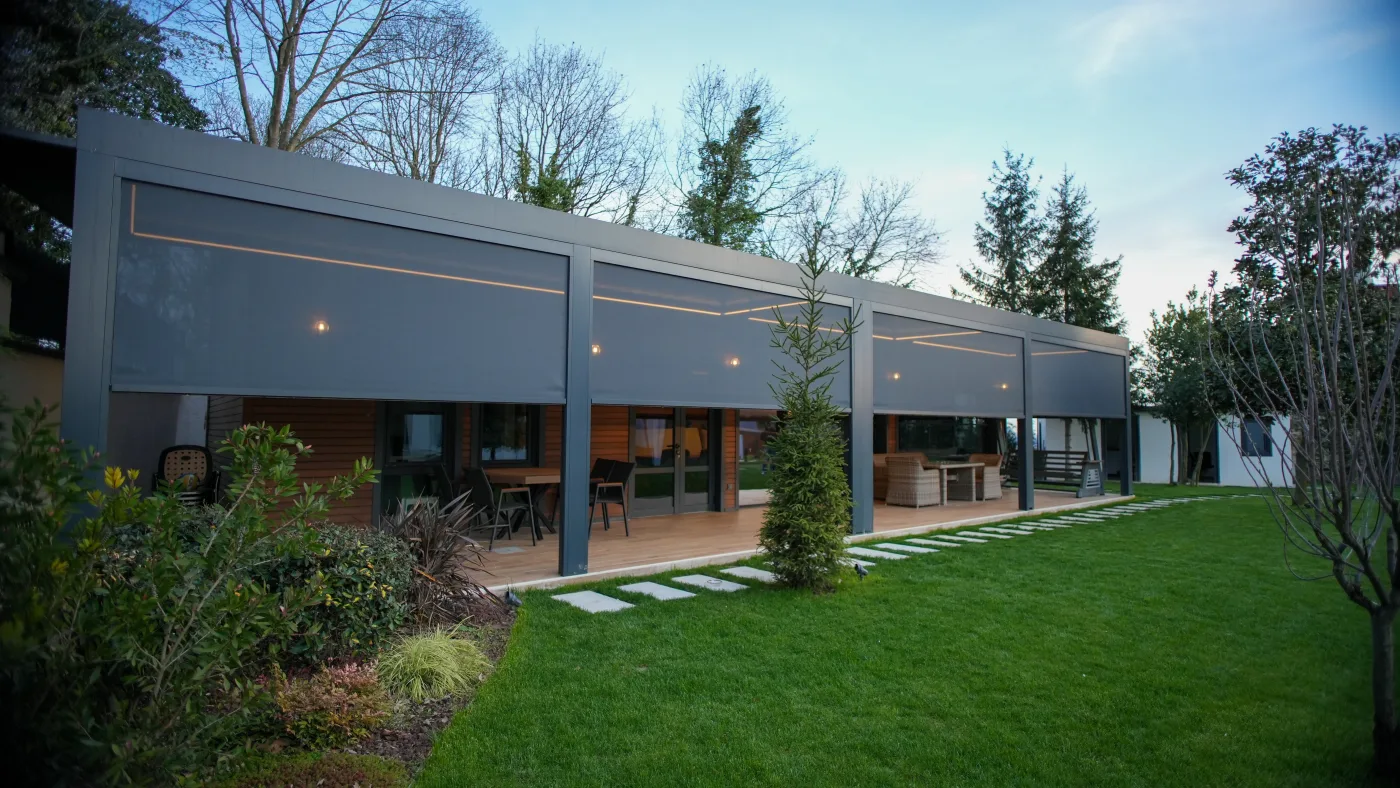
How a ZIP Screen is specified
A ZIP Screen is specified by its components, its fabric and how it is driven rather than by a single model number. This technical reference covers the side-guided construction, fabric and openness, motorization and the performance a specifier should understand. WorldWideTradeX supplies these systems to trade buyers from Türkiye.
The parts that define a ZIP Screen
Selection comes down to fabric, structure and operation, explained here and in the deeper technical pages.
Every ZIP Screen shares a side-guided principle: fabric zipped into aluminium channels so it stays flat and wind-stable. What changes between projects is the fabric, the structure size and the drive.
This page gives the technical overview. Fabric and openness, motorization and the specification sheet each have their own page, linked below. The product pages describe the forms; this area explains how they are built and specified.
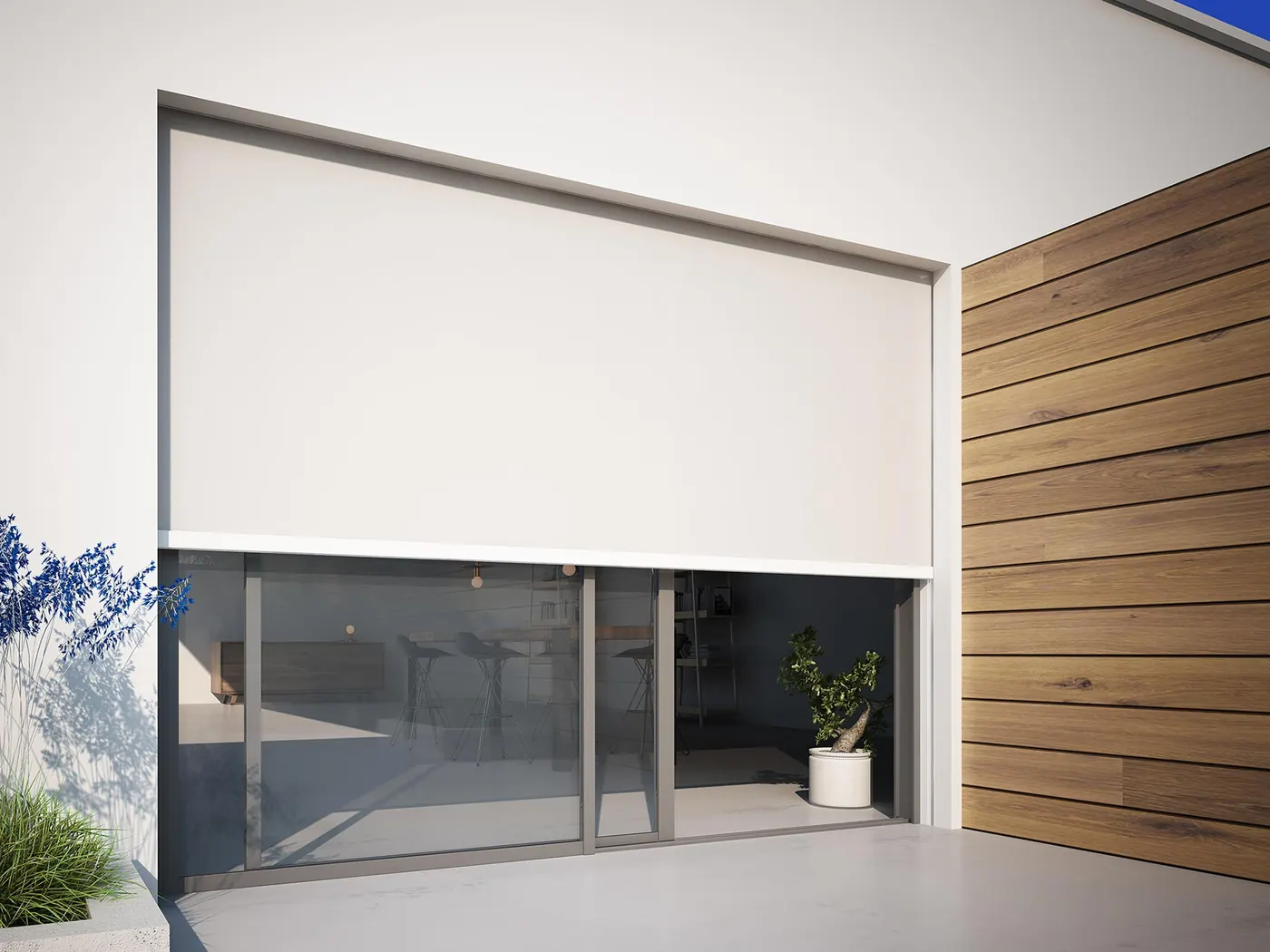
What a ZIP Screen is built from
A short list of engineered parts works together to deliver a stable, guided screen.
- ZIP-guided side channels Aluminium tracks on each side that zip the fabric edges in and keep the screen tensioned and wind-stable.
- Cassette The top housing that retracts and protects the rolled fabric when the screen is up.
- Bottom rail A weighted bar along the lower edge that pulls the fabric flat and seals the bottom of the opening.
- Aluminium profiles Cassette, channels and rails are extruded aluminium, chosen for stiffness at low weight and outdoor durability.
- Fabric A PVC-coated or woven screen mesh, specified by openness factor to balance solar control, glare and outward visibility.
- Motor and motorization A tubular motor with remote, switch or automation, paired with sun and wind sensors on exposed elevations.
Choosing the mesh
The fabric is where shade, glare and view are balanced.
A ZIP Screen fabric is a woven or PVC-coated screen mesh, specified by its openness factor: the proportion of the weave that is open. A more open mesh keeps the view and daylight; a tighter mesh gives more shade, glare control and privacy.
Colour, weight and any blackout or PVC option are chosen to suit the opening and the building. The full detail, including how openness is selected, is on the fabric page.
Read the fabric and openness guide
How the screen is driven
Most ZIP Screens are motorized, with manual options for smaller openings.
A tubular motor inside the cassette extends and retracts the fabric, operated by remote, wall switch or app. On exposed elevations it can be paired with sun and wind sensors, and it can connect to building automation.
The motorization page covers control options, sensors and integration in detail.
Read the motorization guide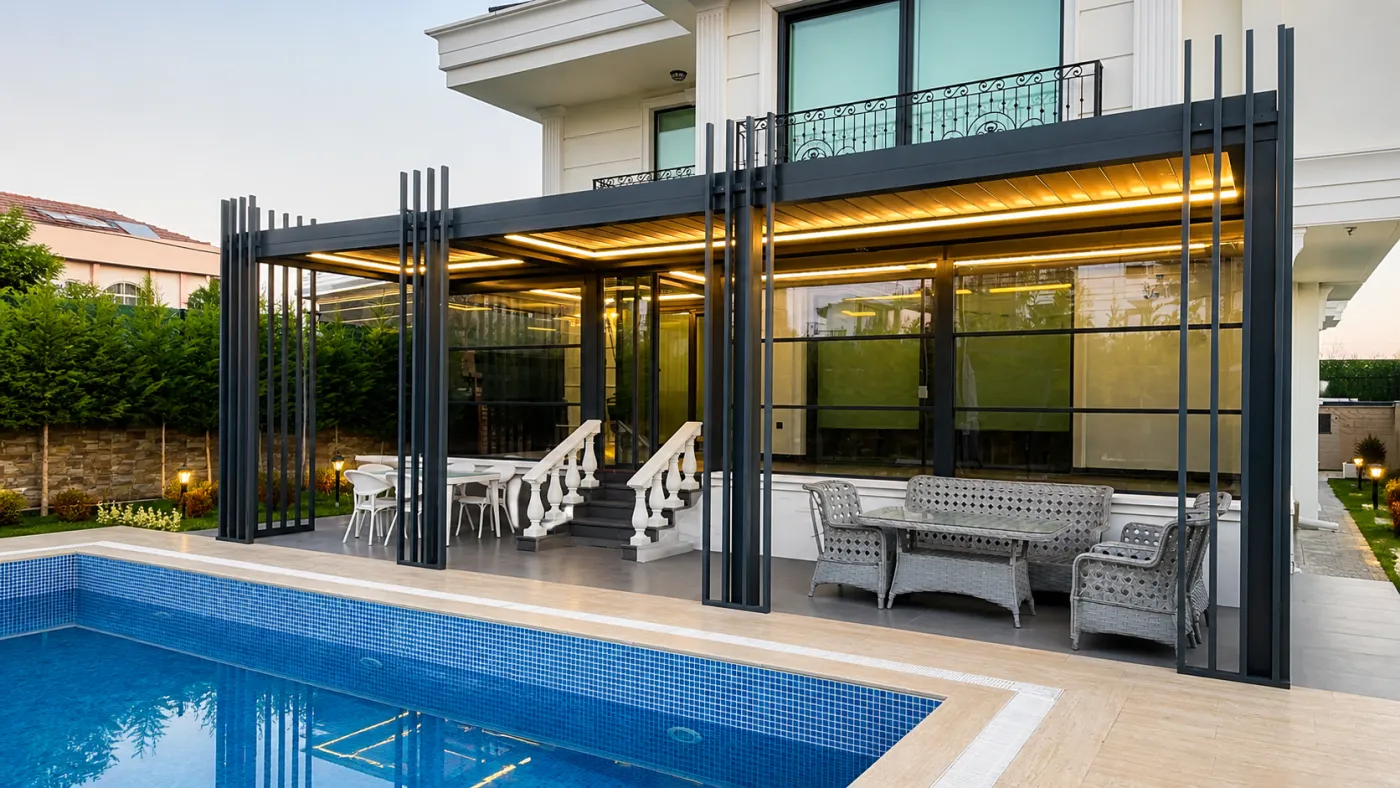
What a ZIP Screen delivers
The side-guided construction supports several performance goals at once.
Wind stability
Zipped side channels keep the fabric taut in breezy conditions.
Solar and glare control
Shading the glass from outside cuts heat and glare before they enter.
UV protection
Screen mesh filters ultraviolet light, reducing fading indoors.
Privacy
At lower openness the fabric screens the view from outside while keeping daylight in.
Insect protection
A lowered screen seals the opening while air still flows through.
Weather buffering
Softens rain mist and prevailing wind at the threshold.
What a specification sheet covers
A clear spec sheet lets architects and installers confirm the system.
The specification covers fabric and openness, channel and cassette sizing, drive type, finish and the dimensions for each opening. Exact figures are confirmed per project and market rather than assumed.
The specifications page lists the fields a specifier should expect and what to provide for an accurate quotation.
Read the specifications guide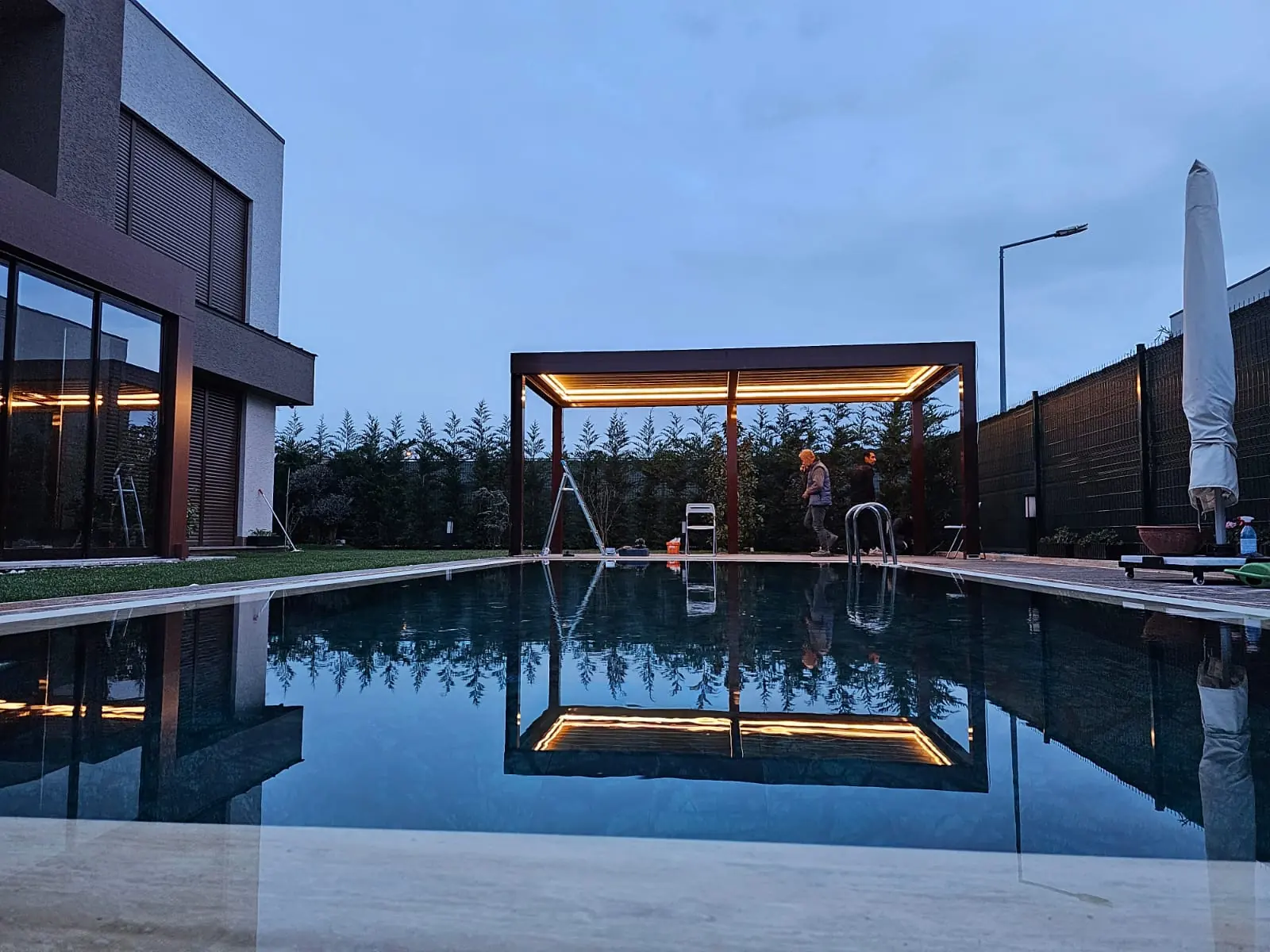
Information that helps us specify
Share as much as you can. Points that depend on the project are confirmed per order.
- Opening type and location Window, balcony, façade or pergola, and where it sits.
- Width and drop Approximate dimensions per opening; final sizes confirmed from drawings.
- Fabric and openness The mesh and openness level suited to shade and view.
- Drive preference Motorized, manual or a mix across the project.
- Environment Exposure, wind and sun so the right system is specified.
- Destination market The market and site for export documentation and delivery.
Frequently asked questions
What is a ZIP Screen made of?
A ZIP Screen combines a fabric zipped into aluminium side channels, a top cassette, a bottom rail and, on motorized units, a tubular motor. The components work together to keep the screen flat and wind-stable.
What does fabric openness mean?
Openness factor is the proportion of the mesh that is open. A higher openness keeps the view and daylight; a lower openness gives more shade, glare control and privacy.
Are ZIP Screens wind resistant?
Yes, within the limits of their specification. The side-guided construction gives wind stability; the right channel size and fabric are selected for each elevation's exposure.
Can ZIP Screens be motorized?
Most are. A tubular motor operates the screen by remote, switch or app, and it can be paired with sun and wind sensors and building automation.
What is the difference between a ZIP Screen and a roller blind?
A roller blind hangs free at the sides and flaps in wind. A ZIP Screen's fabric is guided in side channels, so it stays flat, resists wind and seals the opening more closely.
How is a ZIP Screen specified?
By fabric and openness, channel and cassette size, drive type, finish and the dimensions of each opening. Exact figures are confirmed per project and market.
Can ZIP Screen technical data be supplied from Türkiye?
Yes. As a ZIP Screen Supplier from Türkiye, WorldWideTradeX provides the technical information, specification support and documentation trade buyers need, confirmed per order and destination market.
Talk to the export team
Write to [email protected] or use the contact form below and we will provide specification support for your ZIP Screen project.